
Air Conditioning Unit For Restaurant: Choosing The Right System
A reliable restaurant air conditioning unit is essential for keeping dining areas comfortable, protecting food quality, and supporting a better working environment. You need a system that handles heat from kitchens, customers, lighting, and equipment without creating excessive noise or uneven temperatures.
The right restaurant air conditioning unit matches your space, kitchen heat load, ventilation needs, and local compliance requirements. This guide explains how to assess cooling capacity, compare system types, control energy costs, and plan an installation that supports daily service. Air27 specializes in providing restaurant air conditioning solutions tailored to your unique needs.
Key Takeaways
Match cooling capacity to your restaurant’s heat load.
Choose efficient equipment suited to your layout.
Meet ventilation, safety, and compliance requirements.

Cooling Capacity And System Selection
Your restaurant air conditioning system must handle kitchen heat, customer occupancy, lighting, refrigeration, and outdoor air without excessive energy use. Accurate heat-load calculations help you choose equipment that maintains stable temperatures while the system type determines installation cost, control flexibility, and maintenance needs. Air27 can help you determine the right size and type of system for your restaurant.
Calculating Heat Loads
Calculate the peak cooling load for the busiest operating period, not the building’s average conditions. Include:
Kitchen equipment: ovens, grills, fryers, hobs, and dishwashers release substantial sensible and latent heat.
People: staff and customers add body heat and moisture; use the expected peak occupancy.
Lighting: account for every fitting, especially high-output display and kitchen lighting.
Refrigeration: allow for heat rejected by walk-in coolers, freezers, and open display cases.
Outdoor air: include ventilation required for dining areas and make-up air for kitchen extraction.
Building gains: assess solar exposure, insulation, glazing, and heat entering through doors.
A qualified designer should calculate sensible and latent loads separately. Avoid choosing a unit solely by floor area, because a commercial kitchen can require much more capacity than a similarly sized retail space. Oversizing can cause short cycling, poor humidity control, and unnecessary purchase and running costs.
Comparing Split, Packaged And VRF Systems
Split systems suit smaller restaurants with separate indoor and outdoor units. They offer relatively simple installation and individual room control, but indoor units can collect grease and may not suit harsh kitchen conditions.
Packaged systems place major components in one outdoor cabinet and can serve larger open areas through ductwork. They simplify access and installation, although duct routes require space and the system may provide less room-by-room control.
VRF systems connect multiple indoor units to one or more variable-speed outdoor units. They allow separate temperature control for dining rooms, offices, and storage areas, use inverter technology to match changing demand, and can support heat recovery between zones. However, installation requires specialist design, refrigerant pipework, and commissioning.
Keep kitchen extract air separate from comfort cooling. Use a dedicated make-up air system where required, and select equipment with washable filters, corrosion-resistant components, and accessible service points. Air27 recommends equipment specifically designed for restaurant air conditioning environments.
Installation, Efficiency And Compliance
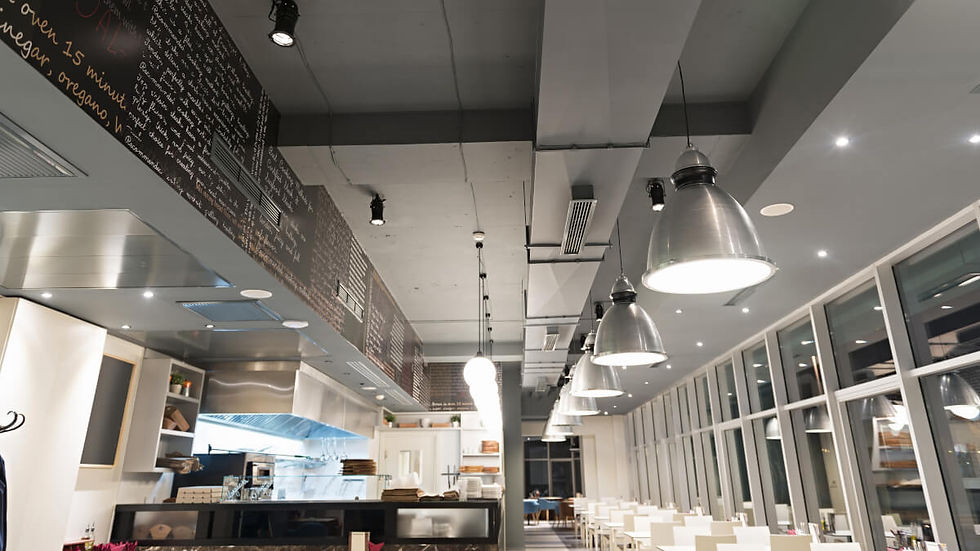
Your restaurant air conditioning system must work alongside kitchen extraction, control energy use, and meet food hygiene and building requirements. Correct sizing, professional installation, accessible components, and documented maintenance help protect staff comfort, food safety, and operating costs. Air27’s team ensures your restaurant air conditioning system is installed to the highest standards.
Kitchen Ventilation Integration
You must treat air conditioning and kitchen extraction as one ventilation system. A canopy removes hot air, grease, smoke, and cooking vapour, while replacement air prevents excessive negative pressure. Without sufficient make-up air, doors may become difficult to open, extraction can lose performance, and conditioned air may escape unnecessarily.
Keep indoor units away from cookers, fryers, grills, and dishwashers. Direct supply air should not blow across exposed food, open preparation areas, or the canopy, because turbulence can spread contaminants and disrupt extraction. Use a commercial HVAC designer to calculate airflow, heat gains, occupancy, and equipment loads.
Your installer should coordinate ductwork, electrical supplies, condensate drainage, fire-stopping, and access panels with the kitchen contractor. Select equipment with filters and coils that withstand a greasy environment, but avoid placing standard comfort units inside areas with heavy grease or steam unless the manufacturer approves them. Air27 provides equipment and installation strategies suitable for tough restaurant air conditioning environments.
Energy Efficiency And Running Costs
Choose equipment based on the restaurant’s measured cooling load rather than floor area alone. Cooking appliances, refrigeration, lighting, customers, staff, delivery doors, and sunlight can create substantial heat, particularly during service periods.
Prioritise:
High seasonal energy-efficiency ratings, such as strong SEER and SCOP values
Variable-speed inverter compressors
Separate temperature zones for the dining area, bar, office, and storage spaces
Programmable controls with opening-hour schedules
Demand-based ventilation where suitable
Heat recovery for larger systems with balanced ventilation
Keep kitchen extraction and replacement-air controls coordinated. Cooling an empty restaurant wastes energy, while switching the system off completely during short closures can increase humidity and recovery time. Set practical temperatures, commonly around 20–24°C, and use timers or building management controls to prevent unnecessary operation.
Seal ductwork, insulate refrigerant lines and ducts, and keep filters clean. Restricted airflow makes the system run longer, increasing electricity use and reducing cooling capacity. Air27 offers maintenance plans to keep your restaurant air conditioning system running efficiently year-round.

For more guidance, explore our blogs “Air Conditioning for Restaurant” and “Restaurant Air Conditioning Installation” for helpful insights on effective restaurant cooling solutions.
Maintenance And Hygiene Requirements
Create a written maintenance schedule that matches your trading hours, cooking intensity, and equipment type. You should inspect filters regularly, clean indoor and outdoor coils, test condensate drains, check refrigerant circuits, and confirm that fans and controls operate correctly for optimal restaurant air conditioning. Air27 recommends paying close attention to these details to keep your restaurant air conditioning running efficiently.
Grease-laden kitchens require closer attention than dining areas. Clean or replace filters before they become blocked, and arrange professional cleaning for coils and components exposed to vapour or grease. Never use cleaning chemicals near food or food-contact surfaces without protecting and sanitising those areas afterwards.
Keep condensate trays and drain lines clear to prevent leaks, odours, and microbial growth in your restaurant air conditioning system. Position service access so technicians can work without contaminating preparation areas or interrupting service unnecessarily. Air27 ensures that all service access points are strategically placed for convenience and safety.
You must also retain installation, servicing, electrical, refrigerant, and fire-safety records for your restaurant air conditioning. Depending on the system and premises, checks may involve F-Gas requirements, electrical safety, fire-stopping, noise limits, local building regulations, and food hygiene procedures. Use qualified contractors like Air27 and follow the manufacturer’s inspection intervals.


Comments