
Fast Air Conditioning Repair London: What to Do First
When your AC cuts out mid-heatwave, the fastest route back to cool air is a call to a specialist who can attend the same day and diagnose the fault on arrival. For fast air conditioning repair London properties can rely on, Air27 sends F-Gas certified engineers who identify the problem and fix it in a single visit wherever parts allow. That first-time-fix approach is what separates a quick callout from a week of waiting around for a second appointment.
A broken AC unit rarely announces itself politely. It might trip the electrics at 2am, drip water onto a shop floor, or simply refuse to turn on the morning a heatwave hits. Every hour it stays broken costs comfort, productivity, or stock in a commercial fridge.
London A/C repair demand spikes hard during warm spells, and homes and offices across Central London and West London often compete for the same engineers on the hottest days. Knowing what to check before you dial, and what a professional visit actually involves, puts you back in control faster. This article covers exactly that: what to do the moment your system fails, and how proper fault-finding gets it running again for good.
What to Do When Your AC Breaks Down
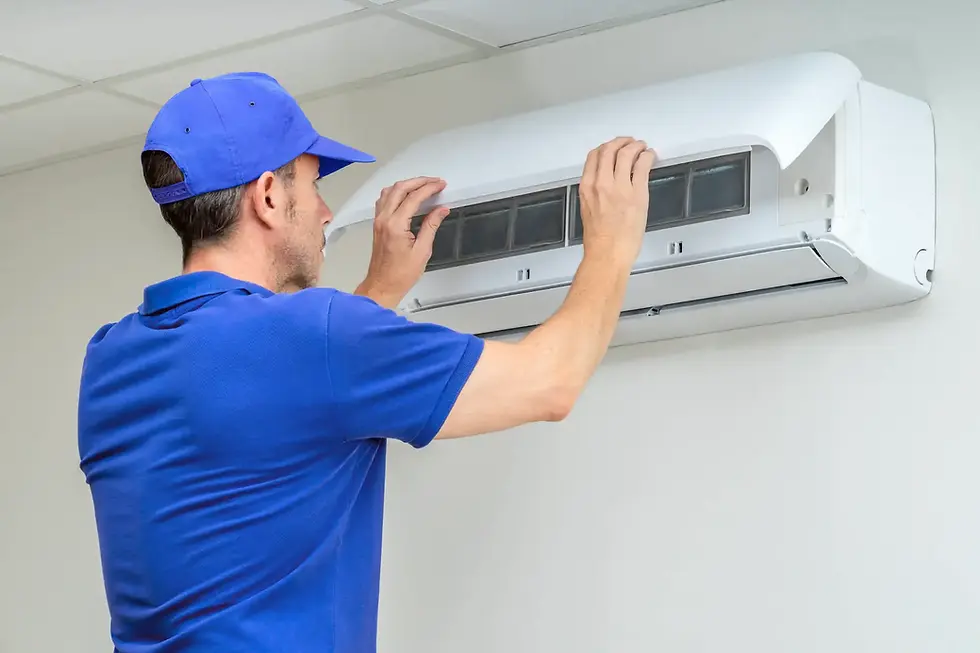
Acting methodically in the first few minutes after a breakdown protects both your safety and your equipment. Cut the power if you smell burning or spot smoke, check for obvious water pooling, note any error codes on the display, and try to describe the exact symptoms before you call for ac repair services. The details you gather in that first look, whether it's no cooling, an odd noise, or a tripped switch, determine how quickly a professional air conditioning repair engineer can prepare the right parts and tools before they even arrive.
Is No Cooling an Emergency?
No cooling is not automatically an emergency, but it becomes one fast in specific settings. A server room, a GP surgery storing medication, or a household with elderly residents during a heatwave all qualify for emergency ac repair. A standard office with mild discomfort can usually wait for a same-day or next-day slot rather than an out-of-hours callout.
What Should You Do If Your AC Is Leaking Water?
Switch off the unit and place towels or a container under the leak to limit damage. AC leaking water usually points to a blocked condensate drain, a full condensate pump, or a frozen coil that's thawing. Water leaks left unattended can damage ceilings, flooring, and electrics, so this warrants prompt attention rather than a "wait and see" approach.
Why Is the Unit Making Unusual Noises?
Unusual noises signal a mechanical problem that's actively getting worse. Grinding often means a failing compressor or fan bearing, rattling can indicate loose panels or debris in the outdoor unit, and hissing may point to a refrigerant leak. Continuing to run a noisy unit risks turning a manageable repair into a full component replacement.
What to Do When the AC Trips the Electrics
Reset the breaker once. If the AC trips the electrics again immediately, stop and call a professional rather than resetting it a third time. Repeated tripping usually means a dead short, a failed capacitor, or a grounded component, all of which carry a genuine fire risk if ignored.
What Error Codes and a Silent Outdoor Unit Can Mean
Error codes on the indoor display point engineers straight to the faulty component, so note the exact code before calling. An outdoor unit not running while the indoor fan works often indicates a compressor fault, a tripped safety switch, or a control board issue. AC not turning on at all can be as simple as a blown fuse or as involved as a PCB failure.
When to Request Emergency Support
Request emergency ac repair when health, safety, or critical infrastructure is at stake, not for routine performance dips. Data centres, healthcare settings, and vulnerable residents during extreme weather justify an urgent callout. For everyday air conditioning repairs for homes and standard residential air conditioning or commercial ac repair needs, a fast scheduled visit within the same day is usually sufficient, and it's typically far more cost-effective than an emergency rate. Whether the job covers residential air conditioning, commercial ac repair, or wider building services, describing the fault clearly speeds up diagnosis considerably.

How Professional Fault Finding Restores Reliable Cooling
Restoring reliable cooling depends on correctly identifying the root cause, not just clearing the symptom. Engineers work through refrigerant pressures, airflow readings, drainage, and electrical continuity in sequence, because a single fault like low airflow can produce symptoms that mimic a refrigerant leak or an icing problem. Getting the diagnosis right the first time is what makes London A/C repair genuinely fast rather than a string of repeat visits.
Why Refrigerant Leaks Need Certified Repair
A refrigerant leak must be handled by an F-Gas certified engineer because refrigerant gases are regulated and harmful if released or inhaled in concentration. Low refrigerant charge reduces cooling capacity and forces the compressor to work harder, accelerating wear. Certified engineers carry out refrigerant leak detection, refrigerant recovery, and safe recharging, and REFCOM Elite registration confirms an engineer meets the industry's compliance standard for handling these gases.
How Restricted Airflow and Icing Are Diagnosed
Icing on the evaporator coil is almost always a downstream symptom of restricted airflow, not a standalone fault. Dirty filters and a dirty evaporator coil are the most common causes, cutting off the air movement the coil needs to stay above freezing. Engineers check filter condition, fan speed, and duct or grille obstructions to trace low airflow back to its source before it refreezes.
Solving Drainage, Pump, and Condensate Problems
Drainage problems are fixed by clearing the blocked drain or blocked condensate drain and testing the condensate pump under load. Condensate pumps fail quietly, often only noticed once water has already leaked into a ceiling void or onto a floor. A thorough repair visit includes flushing the drain line and confirming the pump cycles correctly before the engineer leaves.
Repairing Electrical, Compressor, and Control Faults
Electrical faults, PCB faults, and communication faults between indoor and outdoor units are diagnosed using multimeters and manufacturer fault codes. Capacitor failure is one of the most common causes of a unit that hums but won't start, and it's usually a straightforward same-visit fix. Compressor failure is more serious and often signals the point where repair costs start to approach replacement value.
Which Air Conditioning Systems Can Be Repaired?
Most air conditioning systems in London properties can be repaired on-site, including split systems, multi-split systems, VRF systems, VRV systems, and ceiling cassette systems. The system type affects parts availability and labour time more than it affects whether a repair is possible at all. Commercial buildings often run VRF or VRV systems serving multiple zones, which need engineers familiar with centralised controls and shared refrigerant circuits.
What Happens During a Repair Visit?
A repair visit follows a consistent sequence: diagnostic assessment, fault confirmation, repair or part replacement, then a full system test. Engineers check refrigerant pressures, electrical readings, and airflow before declaring the job complete, and they should explain the fault and cost before carrying out major repairs. A written report at the end covers the work done and any recommendations to prevent the same fault recurring.
When Is Repair Better Than Replacement?
Repair makes sense when the compressor is sound and the fault sits in a component like a capacitor, PCB, fan motor, or drainage part. Replacement becomes the better option once a compressor has failed on an older system, since compressor costs can approach a large share of a new unit's price. Air27 engineers typically talk through both routes on-site so you're deciding with real numbers, not guesswork.
How Planned Maintenance Helps Prevent Repeat Faults
A planned maintenance contract catches the small issues, worn fan bearings, low refrigerant, dirty coils, before they cause a breakdown. Preventative maintenance also keeps warranty terms intact on newer units, since many manufacturers expect documented annual servicing. Properties that invest in regular checks tend to need far fewer emergency callouts for London A/C repair over a system's working life, and Air27's maintenance visits are built around exactly that pattern.

For more useful advice, read “Best Air Conditioning Repair London” and “Where to Find Emergency Air Conditioning Repair London” for guidance on getting reliable AC support.
Conclusion
A fast recovery from an AC breakdown starts with a calm, methodical first look: cut the power if there's any sign of danger, note the symptoms, and check whether the situation genuinely qualifies as an emergency. From there, getting the right engineer out quickly matters far less than getting the right diagnosis on the first visit.
Whether the fault turns out to be a blocked drain, a refrigerant leak, or a failing compressor, proper fault-finding by F-Gas certified engineers is what turns a stressful breakdown into a same-day fix. For homes, offices, and commercial buildings across Central London and West London, that combination of speed and accuracy is what reliable London A/C repair looks like in practice, and it's the standard Air27 works to on every callout.


Comments