
Office Air Conditioning Systems: Efficient Design and Maintenance for Modern Workplaces
- Air 27
- Aug 6
- 7 min read
You need an office air conditioning system that keeps staff comfortable, protects equipment, and runs efficiently without surprise costs. Choose a system sized for your exact cooling load and usage patterns to avoid wasted energy, poor comfort, and costly retrofits. Air27 provides expert solutions for all your office air conditioning needs.
Understanding different system types, installation needs and simple maintenance routines helps you pick the right office air conditioning solution and extend its lifespan. Small changes to controls and cleaning schedules can cut running costs and prevent disruptive breakdowns. Air27 can guide you through all stages, from design to ongoing maintenance.
Key Takeaways
Match system capacity to your office’s cooling demand for reliable comfort.
Select the right type and design to balance upfront cost with efficiency.
Regular maintenance and operation tweaks reduce failures and energy bills.

Assessing Cooling Requirements
You will determine cooling needs by measuring area, counting occupants, and identifying internal heat gains. Use these figures to size systems, select efficiency ratings, and estimate runtime and operating costs.
Calculating Office Space and Occupancy
Measure the conditioned floor area in square metres (m²) and the ceiling height in metres to calculate room volume when ceilings exceed 3 m. Multiply floor area by a baseline sensible cooling load of 60–100 W/m² for typical office use; reduce to ~45–60 W/m² for sparsely furnished spaces or increase to 100–150 W/m² for dense open-plan areas with large server closets.
Count regular occupants and apply an internal heat gain of about 100–120 W per person during typical office activity. For short-term peak occupancy (meetings), plan additional margin of 10–20% to avoid under-sizing. Combine area-based load and occupant heat gain to estimate total sensible load before adding equipment and solar gains.
Use a simple worksheet:
Floor area (m²) × area W/m² = area load (W)
Occupants × 110 W = occupant load (W)
Sum area + occupants = base sensible load (W)
Evaluating Heat Sources
List all equipment and measure nameplate power (W) for computers, servers, printers, photocopiers and kitchen appliances. Apply an operational factor (typical 50–75%) for office IT that is not running at full nameplate continuously. Add lighting loads using measured fixture wattage × hours of use; account for LED vs fluorescent differences.
Assess solar gains by noting window orientation, glazing type, and shading. South- and west-facing façades typically add 50–150 W/m² of glazed area under peak sun without shading. Include internal latent loads from occupants and kitchenettes: estimate 20–40 W per person for latent heat, more if cooking occurs.
Create a heat-source checklist and table for each zone: equipment (W), lighting (W), solar (W), occupants sensible (W), occupants latent (W). Sum to get total internal and external gains per zone for accurate zone-by-zone sizing.
Understanding Energy Efficiency Ratings
Look for seasonal energy efficiency metrics: SEER and ESEER for cooling equipment in the UK/Europe, plus the Energy Efficiency Ratio (EER) at specific test conditions. Higher SEER/EER values indicate lower electrical consumption for the same cooling output. For commercial systems, compare COP (coefficient of performance) at operating conditions near your expected load and supply/return temperatures.
Check system part-load performance and declared load profiles; many units show peak COP but perform less efficiently at typical partial loads. Consider variable refrigerant flow (VRF) or inverter-driven chillers for better part-load efficiency. Also verify heat-recovery options and controls that reduce overall energy use.
Record ratings on a comparison table: Model, Cooling capacity (kW), SEER/EER, COP at design point, part-load performance, and estimated annual kWh. Use those entries to calculate annual running cost using your local tariff and expected annual cooling hours.
Types of Commercial Air Conditioning
Choose systems based on building size, zoning needs, and energy targets. Consider installation footprint, maintenance access, and integration with ventilation and controls. Air27 can help you evaluate and select the most suitable office air conditioning system for your workspace.
Split System Solutions
Split systems place an outdoor compressor/condenser and one or more indoor air handlers. They suit single-zone or small multi-zone offices and are quick to install with modest ductwork or ductless indoor units.
You can select wall-mounted, ceiling cassette, or ducted indoor units to match ceiling height and aesthetics. Efficiency is driven by unit SEER/EER ratings and inverter-driven compressors; pick inverter models for variable load savings.
Maintenance focuses on filters, coil cleaning, and refrigerant charge checks.They perform best when loads are predictable and line lengths are within manufacturer limits to avoid efficiency loss.
VRF and VRV Technologies
Variable Refrigerant Flow (VRF) or Variable Refrigerant Volume (VRV) systems use one outdoor condensing unit to serve many indoor units. They provide precise zone control and simultaneous heating and cooling in different zones, useful for multi-tenant floors or mixed-use office space.
You benefit from high part-load efficiency, heat recovery options, and flexible branch routing using small-diameter refrigerant piping. Plan for professional design: correct pipe sizing, oil management, and control integration are critical to avoid performance issues of the office air conditioning.
Installation has higher upfront cost but lower operating cost for varied loads. Service requires certified technicians familiar with manufacturer-specific controls and refrigerant diagnostics.

Packaged Air Conditioners
Packaged units combine compressor, coils and fans in a single outdoor or rooftop enclosure. They work well for medium to large open-plan offices, rooftop plantrooms, or where indoor plant space is limited.
You can choose direct expansion (DX) packaged units or chilled-water packaged systems that connect to a central chiller.DX units simplify installation; chilled-water packaged units scale better for larger buildings with existing chilled-water networks.
Pay attention to airflow capacity, economiser options for free cooling, and access panels for routine maintenance.Rooftop placement demands curb mounts, sound attenuation, and structural verification to support weight and vibration.
Installation and System Design
Plan duct routes, plant locations and control zones to match your office layout, occupancy patterns and IT room needs. Prioritise access for maintenance, noise control near workspaces and energy-efficient plant siting. Air27 offers design support to ensure your office air conditioning integrates seamlessly with your workspace.
Zoning and Layout Considerations
Divide your office into zones by function and occupancy: open-plan areas, meeting rooms, kitchens and server rooms each need separate control. Size ducts, diffusers and VAV (variable air volume) outlets to maintain 400–600 ppm CO2 targets and 22–24°C comfort in work areas, while keeping server rooms at lower temperatures per equipment specs.
Place indoor units and return grilles to avoid drafts on desks and to limit noise under 40 dB(A) where concentration is required. Use separate thermostats or BACnet-enabled controllers per zone to allow setback and scheduling. Consider perimeter heating or local radiant panels for draught reduction near windows.
Plan for future reconfiguration: use modular ceiling cassettes, raised-floor plenums or accessible false ceilings so you can move zones without major plant changes. Label ductwork and controls clearly to speed diagnostics and repairs.
Integration With Building Management Systems
Connect AHUs, heat pumps and VAV controllers to your BMS using open protocols like BACnet/IP or Modbus TCP for centralised monitoring. Ensure each device reports key points: supply/return temperatures, fan speeds, damper positions, refrigerant pressures and filter differential pressure for the office air conditioning.
Programme control sequences for occupancy schedules, demand-controlled ventilation (DCV) and economiser strategies to reduce runtime and energy use. Use alarms for high CO2, high humidity and condenser faults; route alerts to facilities staff via email or SMS.
Verify communication integrity during commissioning with point-to-point tests and a commissioning report. Provide user-friendly dashboards showing zone setpoints, trends and energy metrics so you can act on issues quickly.
Compliance With UK Regulations
Design and install to meet Building Regulations Part L (energy efficiency) and Part F (ventilation). Demonstrate compliance with SAP or SBEM where applicable, and include SFP (specific fan power) calculations to meet current minimums.
Adhere to F-Gas regulations for refrigerant handling: use certified engineers for installation, leak testing and commissioning. Keep refrigerant charge records and design for low-global-warming-potential (GWP) refrigerants or heat-recovery systems to reduce reporting burdens.
Follow workplace guidance from HSE and CIBSE TM44 for air conditioning inspection regimes. Retain commissioning certificates, maintenance schedules and ventilation rate calculations for compliance audits.
Maintenance and Operational Best Practices
Maintain scheduled service, monitor filters and coils, and train staff on basic operations to reduce failures and energy waste. Air27’s maintenance team can help you keep your office air conditioning system running at peak efficiency.
Routine Servicing Schedules
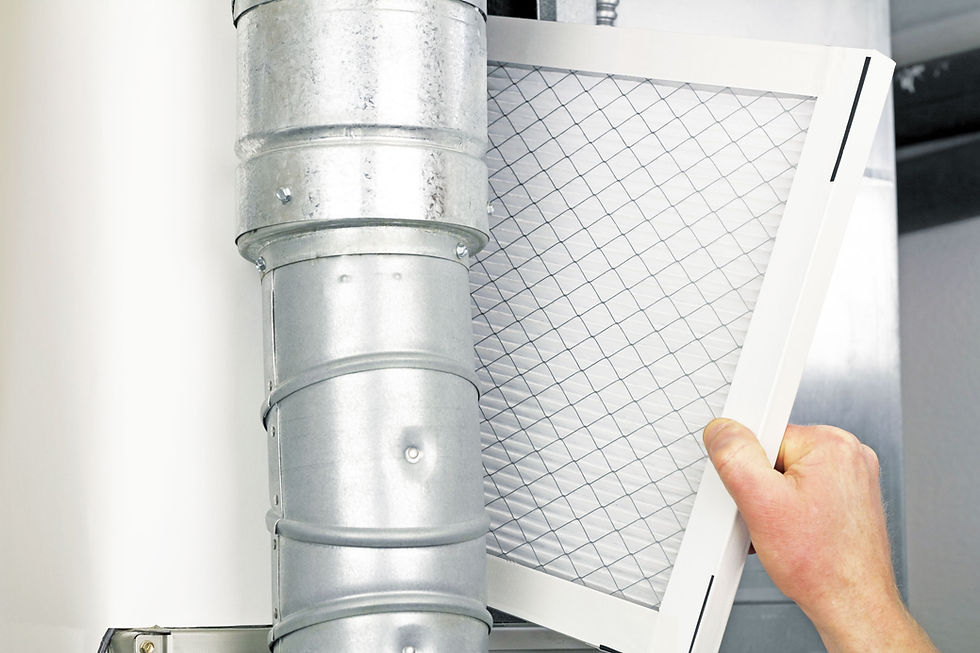
Create a written service calendar that lists tasks by frequency: weekly, monthly, quarterly and annually. Weekly tasks include checking thermostat settings, clearing debris from outdoor units and confirming condensate drains flow. Monthly tasks cover replacing or cleaning filters, inspecting belts and lubricating motors when specified by the manufacturer.
Quarterly checks should inspect coil cleanliness with a coil brush or clean-in-place methods, test refrigerant pressures, and verify electrical connections for signs of overheating. Annual service must include a full refrigerant leak test, blower motor performance check, and detailed control-system calibration by an HVAC technician certified to relevant UK standards. Record all readings and corrective actions in a logbook to spot trends and plan component replacement before failure.
Improving Indoor Air Quality
Use MERV-rated or EN 779-compliant filters sized to your system’s airflow; replace them on the manufacturer’s recommended schedule or sooner in dusty environments. Install pre-filters in high-traffic zones to extend main filter life. Consider adding ultraviolet germicidal lamps in air handlers where moisture encourages microbial growth, and ensure lamps are accessible for safe maintenance.
Balance ventilation rates to meet Building Regulations Part F and maintain CO2 below 1000 ppm in occupied spaces; use demand-controlled ventilation where occupancy varies. Keep humidification between 40–60% relative humidity to reduce viral viability and discomfort. Regularly clean and inspect ductwork for mould, debris and pest ingress; schedule professional duct cleaning if visual contamination or odour persists.
Air27 is your trusted partner for office air conditioning system selection, installation, and ongoing care. For the best in office air conditioning performance, rely on Air27’s expertise to keep your workplace cool, comfortable, and efficient.
If you're choosing equipment for your workplace, explore our Office Air Conditioning Unit blog for expert guidance on selecting the right system to suit your office size, layout, and cooling requirements.
Troubleshooting Common Issues
If office air conditioning cooling capacity drops, first check and replace dirty filters, then inspect evaporator and condenser coils for fouling. Measure supply and return temperatures; an abnormally large split suggests restricted airflow, low refrigerant or failing compressor. For noisy office air conditioning operation, isolate the noise source—fan, compressor or loose panels—and tighten mounts, replace worn bearings, or rebalance fans.
Address thermostat problems by verifying calibration and battery power, then confirm correct control wiring and sensor placement away from heat sources. For condensate overflow, clear traps and condensate pans, verify pump operation and check drain line slope. Air27 recommends keeping a checklist of symptom-to-action steps so you can narrow causes faster on repeat faults. Rely on Air27 for professional solutions to all your office air conditioning issues.


Comments